If we had to choose one neo-vintage watch brand for a five-year horizon, Rolex would currently be our most conservative choice. Patek Philippe would come next for collectors prepared to be more selective, while Audemars Piguet offers compelling investment potential when the right Royal Oak is acquired at the right price.
That ranking needs context. A luxury watch is not a conventional financial instrument, and no Rolex, Patek Philippe or Audemars Piguet can be guaranteed to hold or increase its value over time. The individual reference, originality, condition, provenance and purchase price matter enormously.
For us at Prime SwissTime, the safest investment is therefore rarely the watch with the loudest market performance. It is usually the one with the deepest collector base, recognisable design and enough secondary-market demand to remain desirable when trends change.
Why neo-vintage watches make sense on a five-year horizon?
Neo-vintage watches, broadly associated with the late 1980s through the early 2000s, occupy a particularly attractive position in the luxury watch market. They retain much of the character collectors associate with vintage pieces, yet they are generally easier to wear and maintain than considerably older watches.
There is another advantage. Many important models from this period were produced before luxury sports watches became global status objects. Five-digit Rolex sports references, restrained Patek Philippe watches and earlier Audemars Piguet Royal Oak models often have slimmer cases, lighter bracelets and a less conspicuous presence than their modern counterparts.
For collectors and investors looking five years ahead, we would concentrate on four fundamentals: originality, scarcity, established demand and liquidity.
Rolex. The safest choice for liquidity
Among the three brands, Rolex offers perhaps the clearest answer to the question of liquidity.
A pre-owned Rolex Submariner, Daytona or GMT-Master has an enormous international audience. That does not mean every Rolex model is a good investment. It means a sought-after Rolex sports watch is generally easier to price and resell than a more specialised luxury timepiece.
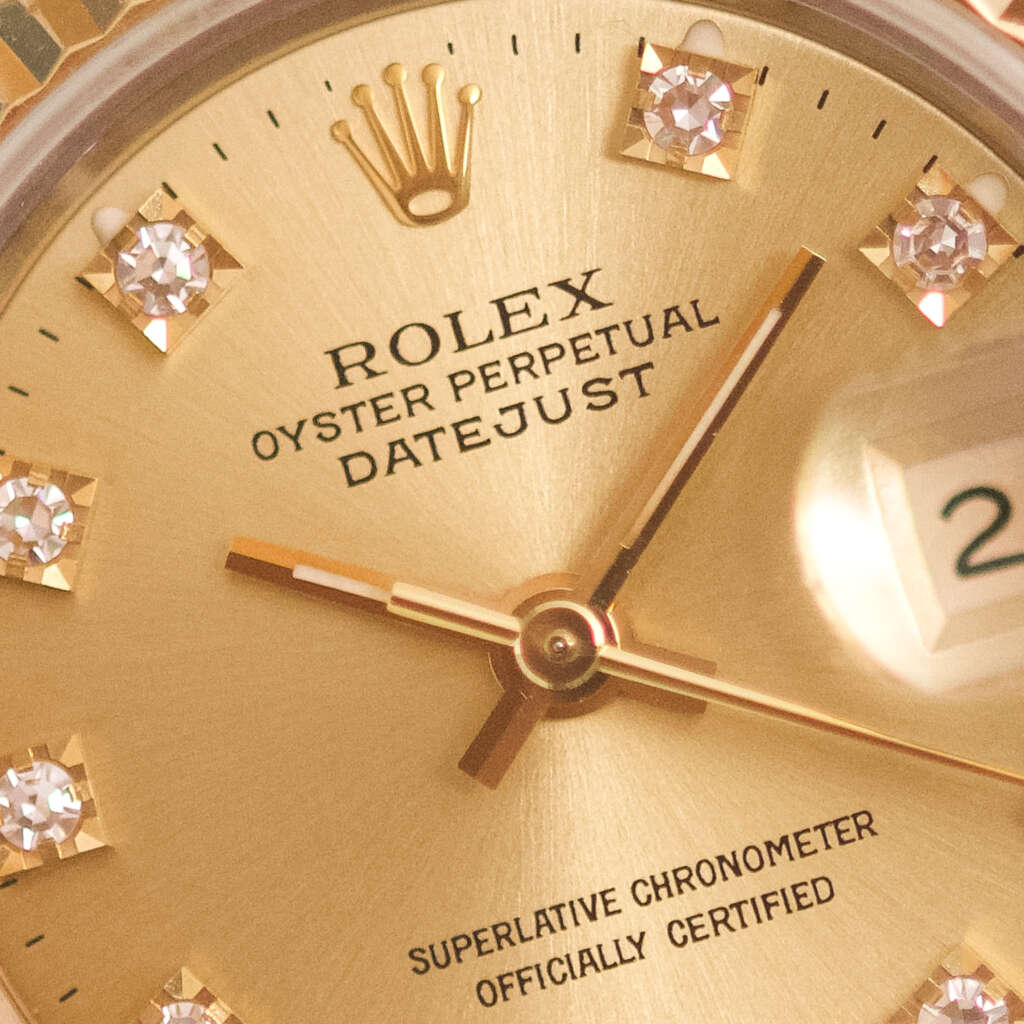
The neo-vintage Rolex lineup is particularly interesting. References such as the Submariner 16610, Datejust 16013 and GMT-Master 16700 retain aluminium bezels and proportions that distinguish them clearly from current production.
Rolex therefore takes first place for us when safety means consistent demand, recognisable references and comparatively strong resale liquidity.
Patek Philippe. Greater horological depth, but reference selection is crucial
Patek Philippe occupies a different position in the luxury watch world. The brand’s investment value is supported by craftsmanship, long-term prestige and limited production rather than sheer market visibility. For neo-vintage collectors, some of the more interesting opportunities may sit outside the obvious Nautilus and Aquanaut families.
A Patek Philippe Calatrava can offer exceptional movement finishing, precious-metal construction and timeless design without the speculative premium attached to the best-known luxury sports watches. Prime SwissTime currently presents the Patek Philippe collection with a Calatrava 5117J, a 37 mm yellow-gold dress watch that represents a very different expression of the manufacture from a Nautilus.
For a five-year horizon, we would pay particular attention to:
- discontinued references with a clear place in Patek Philippe’s history
- watches with original components and strong provenance
- Calatrava and complicated references with restrained proportions
- examples whose investment potential does not depend entirely on short-term hype
Patek Philippe may offer greater horological depth than Rolex, but liquidity varies considerably between references. That makes Patek a compelling investment, although not necessarily the simplest one.
Audemars Piguet. The greatest need for selectivity
The Audemars Piguet Royal Oak occupies an extraordinary position in modern watch design. Introduced in 1972 and designed by Gérald Genta, it helped establish the concept of the luxury sports watch, combining stainless steel with sophisticated finishing and an integrated bracelet.
From an investment perspective, this history is powerful. It also creates a concentration risk. Audemars Piguet’s position in the secondary market is closely associated with the Royal Oak and Royal Oak Offshore.
This means we would be highly selective. The Audemars Piguet selection at Prime SwissTime currently features the Royal Oak Pictet & Cie Edition 15189ST. The limited-edition steel model illustrates exactly why less obvious Royal Oak references can appeal to experienced collectors.
Condition is particularly important with AP. The Royal Oak watch design relies on precise geometry and transitions between brushed and polished surfaces. Aggressive refinishing can permanently alter those details and, consequently, collector appeal.
For that reason, we place Audemars Piguet third in terms of investment safety, although the best individual Royal Oak may have stronger investment potential than an average watch from either of the other two brands.
Rolex vs Patek Philippe vs Audemars Piguet – which would we choose?
Rolex comes first. Strong international recognition, a broad collector base and liquidity make the right neo-vintage Rolex sports watch the most defensive choice.
Patek Philippe comes second. Exceptional craftsmanship, limited production and immense prestige support long-term collectability, although choosing the right reference requires greater knowledge.
Audemars Piguet comes third for safety, but not necessarily for opportunity. A rare, correctly priced Royal Oak can be a strong investment, yet differences between individual references and condition are particularly significant.
The hierarchy can change completely once specific watches are compared. An outstanding Royal Oak should not be rejected simply because Rolex ranks higher at brand level. Equally, a mediocre Rolex should never be bought simply because the crown on its dial makes resale easier.
FAQ
Which luxury watch brand is the safest five-year investment?
Among Rolex, Patek Philippe and Audemars Piguet, we consider Rolex the most defensive choice because of its broad international demand and strong secondary-market liquidity.
Which Rolex watches have strong investment potential?
Neo-vintage Submariner, GMT-Master, Datejust and Daytona references are particularly interesting when they retain original components and good case geometry.
Is Patek Philippe a better investment than Rolex?
It depends on the reference and investment goals. Patek Philippe offers exceptional craftsmanship and scarcity, while Rolex generally provides greater liquidity.
Do luxury watches always increase their value over time?
No. Even watches from prestigious brands like Rolex, Patek Philippe and Audemars Piguet can fluctuate in value. Buying carefully remains more important than relying on the reputation of the brand alone.