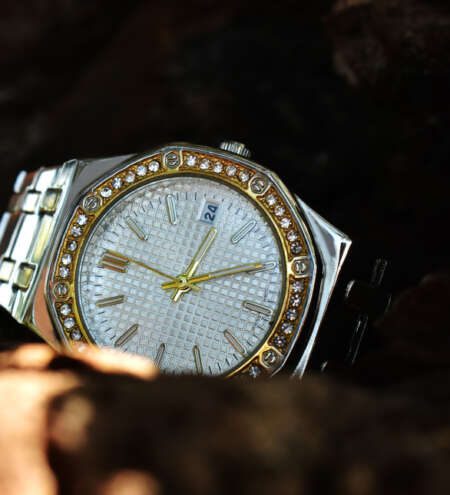
Owning a vintage Omega watch brings a unique sense of connection to traditional watchmaking. Whether it is a classic Omega Speedmaster, a refined Constellation, or a robust Seamaster diving watch, these Omega timepieces were built with remarkable mechanical precision.
Collectors who buy an Omega watch often ask a simple question: how should I properly wind an Omega without risking damage? The answer depends on whether the watch is equipped with a manual wind watch or an automatic movement, but several universal rules apply.
Below are five practical principles that help keep your authentic Omega watch running safely for decades.
What will you find in this text?
- Identify whether your Omega Is manual or automatic
- Always wind the crown gently and clockwise
- Avoid excessive winding and repeated adjustments
- Be careful when setting time or date
- Consider storage and daily use
- Examples of Omega watches available at Prime SwissTime
1. Identify whether your Omega is manual or automatic
Before you wind a watch, the first step is understanding the type of movement. Many classic Omega Speedmaster Professional models, for example, use manual movements, while numerous Omega Seamaster references feature an automatic watch mechanism.
A manual Omega watch requires daily winding because the watch is powered only by the mainspring. An automatic Omega watch uses the natural movement of the wrist to generate energy. When you wear your Omega daily, the rotor inside the movement winds the spring automatically.
If the watch has been sitting for a few days and the power reserve is empty, you may still need to wind an automatic model manually to start it. In that case you simply turn the crown clockwise several times before wearing it.
Understanding whether your Omega watch has a manual or automatic mechanism is the first step toward safe operation.
2. Always wind the crown gently and clockwise
When you wind a manual watch, technique matters. The correct method is simple:
- hold the watch securely
- simply turn the crown in a clockwise direction
- rotate the crown clockwise slowly and smoothly
- continue until you feel a slight resistance
This resistance indicates the mainspring is reaching a full wind. At that point the watch is fully wound, and you should stop winding immediately.
Many people worry they might overwind their watch. In reality, modern mechanical systems prevent catastrophic damage, but forcing the crown beyond the natural resistance can strain components and create unnecessary tension in the spring.
A gentle motion and patience are the safest way to wind your watch.
See also: Five key signals it’s time to sell your luxury watch and optimize your return
3. Avoid excessive winding and repeated adjustments
Collectors sometimes wind my watches repeatedly during the day without realizing that it is unnecessary. When a manual wind watch reaches its full power reserve, additional winding does not improve performance.
Key things to remember:
- once the watch is fully wound, further turning adds pressure to the mechanism,
- repeated watch winding may accelerate wear on older manual movements,
- vintage watches benefit from a consistent routine rather than constant adjustment.
For most manual Omega watches, a single full winding every morning keeps the watch running smoothly for the next 40-50 hours.
4. Be careful when setting time or date
Operating the crown incorrectly can also cause damage, particularly in older watches with calendar functions.
When you set the time or set the date, always follow these steps:
- gently pull the crown back to the appropriate position,
- rotate slowly while adjusting the time,
- avoid quick or forceful movements,
- push the crown firmly back once the watch is set.
Vintage watches were not always designed with the same protections as modern models. Many older movements require special attention when adjusting the date. If the user manual is unavailable, a trusted watchmaker can explain the correct procedure.
This careful approach helps keep your Omega functioning reliably for many years.
5. Consider storage and daily use
A vintage watch performs best when worn regularly. The natural movement of the wrist keeps an automatic movement active and ensures lubrication spreads evenly across the mechanism.
If you rotate several watches in your collection, you may consider, for example: an automatic watch can remain ready using a watch winder, manual models should simply be wound before wearing nad avoid storing watches in humid environments to protect water resistance.
While a watch winder can be useful, it is not essential for most collectors. Many enthusiasts prefer to wind the watch manually when they choose to wear your Omega.
Omega watches available at Prime SwissTime
Collectors exploring Omega timepieces can find several interesting references in the Prime SwissTime collection.
The Omega Speedmaster Reduced represents one of the most recognizable Speedmaster models. This automatic chronograph preserves the classic Speedmaster dial layout while offering the convenience of an automatic movement, meaning owners usually don’t need to wind the watch daily.
Another excellent example is the Omega Speedmaster Date, a versatile chronograph combining the iconic Speedmaster design with everyday practicality. Its automatic mechanism stores energy through the movement of the wrist, making it easy to wear as a daily Omega watch.
For enthusiasts of sports watches, the Omega Seamaster 300M Titanium demonstrates Omega’s expertise in professional diving watch construction. Its modern automatic movement delivers a strong power reserve while maintaining the robust engineering expected from the Seamaster line.
For collectors looking to buy an Omega watch or expand their collection of authentic vintage pieces, working with experienced specialists ensures every watch represents genuine Swiss watchmaking heritage.
FAQ – Winding and operating vintage Omega watches
How often should I wind a manual Omega watch?
Most manual wind watches should be wound once per day. A full watch winding usually provides a power reserve of about 40–50 hours.
Can I overwind a vintage Omega watch?
When you wind the crown and feel a slight resistance, the watch is fully wound. At that point you should stop winding to avoid unnecessary pressure on the movement.
Do automatic Omega watches need winding?
An automatic Omega watch usually doesn’t need to wind if you wear your Omega daily. The natural movement of the wrist powers the automatic movement.
Should I use a watch winder for my Omega?
A watch winder can keep an automatic watch running when not worn, but it is not essential. Many collectors simply wind a watch manually before wearing it.