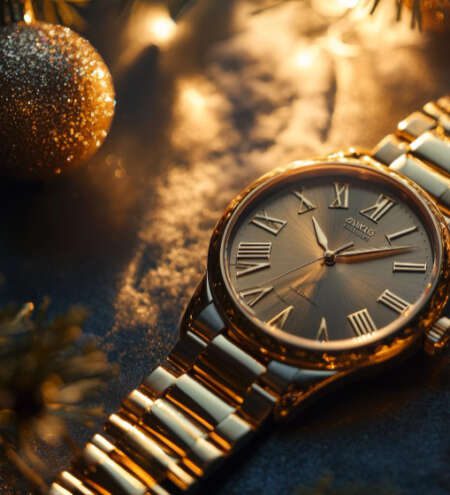
In fine watchmaking, ageing can be remarkably beautiful.
A softly darkened dial may catch the eye, but in neo-vintage watches the real conversation often begins with the luminous material on the hands and hour markers. When tritium slowly turns from bright white to cream, beige or warm vanilla, the watch gains a depth that collectors immediately notice. This natural patina is not a cosmetic defect. In many cases, it is one of the details that defines the value, originality and desirability of the timepiece.
The conversation around Tritium vs Luminova reflects this perfectly. On the surface, it appears technical – radioactive lume versus modern photoluminescent compounds. In reality, it is a discussion about aesthetics, authenticity and the emotional character of a luxury watch.
At Prime SwissTime, many of our clients searching for neo-vintage Rolex, Patek Philippe, Cartier, IWC or Blancpain references pay close attention to lume. Not because they need a watch to glow brightly in the dark, but because lume reveals the story of the watch itself.
A neo-vintage timepiece with untouched tritium often carries a warmth that modern production struggles to recreate authentically.
Why lume became one of the most important details in collecting?
Originally, luminous material served a purely functional role. It allowed military personnel, divers and pilots to read the time in the dark. Over time, however, watch luminescence evolved into something far more nuanced.
Today, experienced collectors often evaluate the dial and hands before anything else. The colour of the lume, the consistency between hour markers and hands, the way the material has aged over decades – these elements can dramatically influence both collectability and emotional appeal.
A neo-vintage Rolex Submariner with evenly aged tritium markers will feel entirely different from the same reference fitted with modern service lume. Technically, the newer material performs better. Visually, however, many collectors find it far less compelling.
This distinction defines much of the neo-vintage market today.
Tritium and the elegance of natural ageing
For decades, tritium was the dominant luminous material used across the Swiss watch industry. Brands such as Rolex, Omega, IWC and Breitling relied heavily on it throughout the 1970s, 1980s and 1990s.
Tritium is a radioactive isotope of hydrogen. Unlike modern photoluminescent compounds, tritium emits light continuously through radioactive decay. It does not require exposure to light beforehand. The lume works independently, creating a constant soft glow.
Yet the most fascinating characteristic of tritium is not its luminosity. It is the way it ages.
Because tritium has a half-life of 12.3 years, its glow gradually weakens, but the material often becomes visually more interesting. The lume on the hands and hour markers can shift from clean white to cream, beige, ivory or light amber. For collectors, this colour change is crucial. A neo-vintage Rolex or IWC with matching patina on the dial and hands will usually be seen as more coherent, more original and more desirable than the same reference with replaced or freshly relumed components.
No two tritium watches age in exactly the same way. For collectors, this unpredictability creates much of the appeal.
A beautifully preserved tritium watch may feature:
- warm cream hour markers,
- matching patina across dial and hands,
- subtle tonal depth on the dial,
- softened aesthetics even in daylight,
- naturally aged luminous material without restoration.
At Prime SwissTime, collectors frequently ask specifically for untouched tritium dials because originality matters more than brightness in the neo-vintage world.
From radium to tritium – the evolution of luminous materials
Before tritium, the use of radium dominated watch luminescence. Radium was highly radioactive and eventually recognised as potentially dangerous, particularly for workers who handled it directly in manufacturing environments.
Tritium represented a safer evolution.
The small amounts of tritium gas used in Swiss Made watches emit low-energy radiation that remains contained within the watch. Under normal wearing conditions, tritium watches are considered completely safe.
Collectors can usually identify tritium production through markings at the bottom of the dial:
- T Swiss T
- Swiss T < 25
- T Swiss Made T
Today, these small details carry significant importance in the pre-owned market. A correct tritium dial often contributes substantially to the value and desirability of a neo-vintage timepiece.
The arrival of Luminova and Super-LumiNova
By the late 1990s, the watch industry began moving away from radioactive luminous material entirely.
This transition introduced Luminova, developed by the Japanese company Nemoto. Unlike tritium, Luminova is non-radioactive and photoluminescent. It absorbs energy from light exposure and releases it gradually in darkness. Swiss manufacturers later adopted Super-LumiNova through RC Tritec AG, which remains one of the most respected suppliers of luminescent material in Swiss watchmaking today.
Technically, Super-LumiNova solved many limitations associated with tritium:
- stronger glow,
- improved luminosity over extended periods,
- non-radioactive composition,
- better visibility well in the dark,
- wider variety of colors,
- more stable long-term performance.
A modern Super-LumiNova dial can remain visible for hours in the dark after sufficient exposure to light.
From a purely functional perspective, superluminova is superior. Yet collectors rarely evaluate watches through functionality alone.
Why many collectors still prefer tritium
The beauty of tritium lies precisely in its imperfection. Modern Super-LumiNova maintains consistency. Tritium evolves. That distinction changes the emotional presence of a watch entirely.
A neo-vintage Rolex with creamy tritium on the hands and hour markers often has a very different presence from a contemporary diver with bright white luminous paint. The value lies in consistency: when the dial plots and hands age together, the watch feels complete and untouched. If the hands are much brighter than the markers, or the markers have been relumed, collectors will usually see it immediately. In the neo-vintage market, this can affect both trust and price.
For collectors of neo-vintage watches, authenticity matters deeply. Artificial “fauxtina” rarely carries the same credibility as genuine tritium patina developed naturally over decades.
This explains why the discussion around tritium vs super-luminova remains so active among serious watch enthusiasts.
Transitional neo-vintage watches are especially fascinating
One of the most interesting aspects of the neo-vintage era is that many references exist in both tritium and luminova configurations. Late 1990s Rolex references are a perfect example. Depending on production year, market and service history, the same watch may appear with:
- original tritium lume,
- early luminova and superluminova execution,
- later service replacement dial.
To an inexperienced buyer, these differences may seem minor. For collectors, however, they significantly affect collectability, aesthetics and long-term value. This is particularly relevant when evaluating pre-owned watches, where originality becomes essential.
At Prime SwissTime pre-owned collection, we regularly guide clients through these distinctions because subtle details often define exceptional collecting decisions.
Tritium tubes and modern gaseous tritium technology
Although painted tritium largely disappeared from the industry, tritium itself is still used in modern watchmaking.
Certain watch brands employ GTLS technology – gaseous tritium light sources. Instead of painted lume, these systems use tiny glass tubes filled with tritium gas. The inside coating reacts continuously, allowing the watch to emit light without external charging. This approach differs entirely from traditional tritium paint found on neo-vintage watches. The glow appears brighter, sharper and more technical. Collectors seeking vintage aesthetics, however, usually continue to prefer aged painted tritium because of its softer appearance.
Lume as part of a watch’s identity
In high-end collecting, details often carry emotional weight far beyond their practical purpose.
Lume is one of those details.
The transition from tritium to Super-LumiNova reflects a broader transformation within watchmaking itself. The neo-vintage period represented a delicate balance between old-world craftsmanship and modern manufacturing progress. Watches from this era still preserved warmth, proportion and individuality while benefiting from stronger reliability and improved construction.
That balance explains why neo-vintage collecting continues gaining momentum among sophisticated buyers.
A beautifully aged tritium dial, an untouched Rolex diver, an elegant Cartier with softly faded markers or an early Patek Philippe complication with warm luminous tones often possess something many modern watches lack entirely: intimacy.
Choosing between tritium and Luminova
The choice ultimately depends on what the collector values most. A client looking for emotional depth, natural patina and vintage aesthetics will often gravitate toward tritium. Someone prioritising stronger nighttime visibility and cleaner long-term appearance may prefer luminova and superluminova.
Neither approach is wrong. What matters is originality, condition and honesty of the watch itself.
At Prime SwissTime, we believe the finest neo-vintage timepieces are the ones that age gracefully without losing their identity. Whether through the warm fade of tritium or the crisp clarity of Super-LumiNova, lume remains one of the most revealing details in luxury watchmaking.
It tells the story of time – not digitally, but physically, on the surface of the watch itself.
FAQ – Tritium vs. Luminova
What is the difference between tritium and Luminova?
Tritium glows continuously and ages naturally. Luminova and Super-LumiNova need light exposure first, but shine stronger and are non-radioactive.
Why do collectors like tritium?
Because it develops natural patina. Creamy hour markers, warm dial tones and matching hands can make a neo-vintage watch more desirable.
Does tritium still glow?
Usually very weakly. Its half-life is 12.3 years, so most 1990s tritium watches are now valued more for appearance than glow.