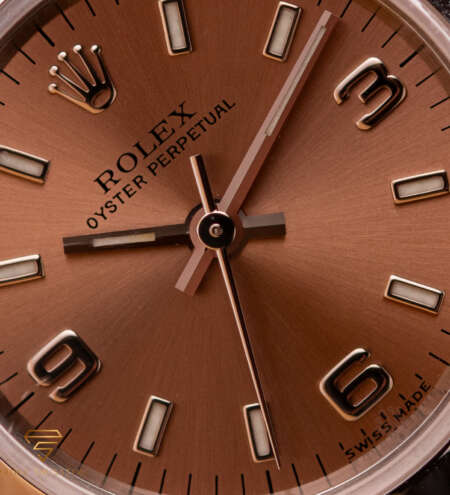
There are moments in watchmaking history that reveal their importance only years later. The 1990s belong to this rare category. At the time, they seemed like a period of recovery after the quartz crisis. Today, collectors increasingly see them as one of the most fascinating chapters in modern horology.
For us at Prime SwissTime, the appeal of a neo-vintage watch lies in its balance. These timepieces carry the discipline of traditional watchmaking, the elegance of vintage aesthetics and the reliability expected from modern watches. They are not fragile museum pieces. They are not oversized contemporary statements either. They sit between both worlds with quiet confidence.
A well-chosen neo-vintage timepiece offers something increasingly rare: proportion, restraint and character.
What makes a watch neo-vintage?
A neo-vintage watch usually comes from the late 1980s, the 1990s or the early 2000s. This was the period when the Swiss industry, having survived the quartz crisis, returned to mechanical watchmaking with renewed conviction.
The finest watches from this period often feature slimmer case sizes, elegant dial layouts, refined bracelets and beautifully aged details. A silver dial with subtle patina, a black dial with tritium markers, a yellow gold case with restrained dimensions or a chronograph with balanced sub-dials can say far more than a loud modern design.
This is where the charm begins. Neo-vintage does not try to imitate true vintage. It carries the best of the old while offering better everyday usability.
The 1990s and the rebirth of mechanical watchmaking
The quartz crisis forced the great maisons to ask a difficult question. Why should anyone choose a mechanical watch when quartz was cheaper and more accurate?
The answer shaped the neo-vintage era. Accuracy alone was no longer enough. A mechanical watch had to represent craft, heritage, emotion and permanence.
Patek Philippe refined the annual calendar and perpetual calendar. Audemars Piguet developed technically ambitious complication watches. Bvlgari returned to traditional watchmaking with remarkable conviction. Chopard protected the language of guilloché, classical hands and historic dial architecture. TAG Heuer, IWC and Tudor reminded collectors that discreet horological excellence still had a devoted audience.
This was not marketing nostalgia. It was a serious reconstruction of mechanical watchmaking.
Why collectors are returning to neo-vintage watches
Luxury clients rarely buy only specifications. They buy proportion, history, condition and feeling.
That is why neo-vintage watches have become so desirable. They offer case sizes that sit naturally on the wrist, bracelets that feel elegant rather than heavy and dials that age with individuality. Patina on tritium markers, a softened white dial, a warm silver dial or a lightly faded bezel can make every timepiece distinct.
A collector who already owns modern watches often begins to look for something quieter. A neo-vintage Rolex, Cartier, IWC or Patek Philippe can bring that shift. These watches do not demand attention. They reward knowledge.
For many clients, this is also where value for money becomes compelling. Compared with current retail price levels, selected pre-owned watches from the neo-vintage period can offer stronger personality, finer proportions and serious horological substance.
You can explore carefully selected examples in the Prime SwissTime collection of pre-owned luxury watches.
Patek Philippe, complication and the elegance of restraint
Patek Philippe is central to the neo-vintage conversation. The brand’s 1990s and early 2000s production includes watches that feel exceptionally relevant today: annual calendar models, perpetual calendar references, refined dress watches and complicated pieces in yellow gold, white gold or platinum.
What makes these watches special is not only the complication. It is the restraint around it. A perpetual calendar with a balanced dial, a discreet moonphase or a perfectly proportioned case reflects a level of design discipline that collectors now actively seek.
A neo-vintage Patek Philippe does not need excessive size to express importance. Its authority comes from architecture, movement finishing and heritage.
Cartier and the return of refined dress watches
Cartier occupies a different but equally important place in this discussion. While many brands pursued technical complexity, Cartier mastered elegance through form.
The Tank, Santos and Tortue from the neo-vintage era speak to collectors who appreciate line, proportion and cultural permanence. A Cartier dress watch from this period can feel more sophisticated than many modern watches because it leaves space around the design. Nothing feels forced.
This explains why Cartier has become so relevant again among private collectors. The best examples are discreet, beautifully wearable and immediately recognisable without being loud.
Selected Cartier timepieces can be found through the Prime SwissTime offer, where condition, authenticity and long-term wearability are treated as priorities.
Independent watchmaking and the creative force of the era
The neo-vintage period also gave independent watchmaking a stronger voice. Franck Muller, Daniel Roth, Roger Dubuis, F.P. Journe and Philippe Dufour helped redefine what an independent watchmaker could represent.
This was a moment of creative intensity. Franck Muller brought theatrical complications and bold case designs. Daniel Roth developed a highly distinctive aesthetic rooted in Breguet-inspired watchmaking. Roger Dubuis combined expressive design with serious finishing. F.P. Journe gave collectors intellectual, technically original watchmaking. Philippe Dufour elevated hand-finishing to an almost mythical level.
For today’s collector, early independent pieces can be especially compelling. They were made in smaller numbers, often with stronger personal involvement from the watchmaker and with less influence from corporate standardisation.
Rolex, IWC and the strength of everyday neo-vintage
Not every neo-vintage watch needs to be a grand complication. Some of the most satisfying pieces from this era are practical daily companions.
Five-digit Rolex references, IWC chronographs, Breitling pilot watches and selected tool watch models from the 1990s offer a very attractive mix of utility and refinement. A steel case, a clear dial, a reliable movement and moderate case sizes make these watches genuinely wearable today.
A neo-vintage Rolex Submariner, GMT-Master or Datejust often has a different presence from a current model. It feels lighter, more understated and closer to the original design language. For many collectors, that is exactly the point.
What should a collector check before buying?
A luxury watch from the neo-vintage era should be bought with knowledge, not haste. Condition matters. Originality matters even more.
Before purchasing, we recommend paying close attention to the dial, hands, lume, bracelet, polishing history, movement condition and reference consistency. A beautiful watch look can hide poor servicing, replacement parts or excessive polishing.
The most important points are:
- original dial and hands,
- correct ref and serial range,
- honest case condition,
- bracelet stretch appropriate to age,
- documented service history where available,
- movement inspected by a qualified watchmaker,
- coherent patina across dial and hands.
At Prime SwissTime, we approach pre-owned watches with this level of care because our clients expect more than availability. They expect trust.
Why the neo-vintage era feels so relevant now
The strongest luxury trends today are not about excess. They are about discernment.
Neo-vintage watches answer that mood perfectly. They are elegant without being nostalgic, collectible without being untouchable and technically serious without appearing overdesigned. They remind us that watchmaking is most powerful when it respects proportion, material, craft and time.
The 1990s were not simply a bridge between vintage era and modern watchmaking. They were a rebirth. A period when great brands and independent watchmakers gave mechanical watches a new purpose to survive and thrive.
For collectors entering the world of neo-vintage watches, the reward is clear. These timepieces offer the best of the old, the reliability of the modern and the quiet confidence that defines true luxury.
FAQ – Neo-vintage watches
What is considered a neo-vintage watch?
A neo-vintage watch usually comes from the late 1980s, 1990s or early 2000s. These watches combine vintage aesthetics with the reliability of more modern mechanical watchmaking.
Why are neo-vintage watches becoming more popular?
Collectors appreciate their balanced case sizes, refined proportions and individuality. Many neo-vintage references also feel more understated and elegant than contemporary luxury watches.
Are neo-vintage watches a good investment?
Certain references from Rolex, Patek Philippe, Cartier, IWC or Audemars Piguet have seen strong collector demand in recent years, especially examples with original dials, bracelets and untouched patina.
Why is tritium patina important?
When tritium lume ages naturally, it often changes from white to cream or beige tones. Collectors highly value matching patina across the dial and hands because it signals originality and honest ageing.
What should collectors check before buying?
The most important details include:
- original dial and hands,
- correct reference and serial numbers,
- consistent patina,
- bracelet condition,
- service history,
- signs of over-polishing or reluming.