The luxury watch market is built on heritage, craftsmanship, and value. Unfortunately, this also makes it a prime target for counterfeiters. Whether you’re buying your first timepiece or adding to your collection, knowing how to identify an authentic watch is a critical skill that protects both your wallet and your reputation.
Fakes today vary in quality. Some are easy to spot, but others can be surprisingly convincing. That’s why understanding how to verify authenticity is so important. With a few key points of knowledge, you can avoid costly mistakes and buy with confidence. A solid buying experience starts with awareness.
What are an authentic watches?
An authentic watch is a timepiece produced and certified by the original manufacturer, built according to strict technical and aesthetic standards. These watches are assembled using high-end materials and refined engineering, combining beauty and precision into one wearable piece of craftsmanship.
Owning an authentic luxury watch, whether new or pre-owned or second hand, means owning more than a product. It means investing in history, reliability, and design with enduring value. A real watch reflects the legacy and quality of the brand that made it. Authentic watches feel solid, precise, and distinct compared to replicas.
Key features of an authentic luxury watch
Precision and craftsmanship
One of the most defining traits of a genuine luxury watch is its finishing. Every visible component, from the dial to the crown, is meticulously refined. The surfaces are clean, the alignment is exact, and the proportions are balanced. Every detail reflects the care and expertise of the watchmaker. These qualities are rarely seen in counterfeits, which often lack finesse under close inspection.
Mechanical watches from reputable brands like Rolex, Patek Philippe, or Audemars Piguet are engineered with movements invisible to the naked eye that require expert skill to assemble. These mechanical movements are often the hallmark of luxury and a clear sign of authenticity.
Materials
Authentic luxury watches are made using high-grade materials. Stainless steel, titanium, gold, and platinum are common in both cases and bracelets. In watches made from precious metals, official hallmarks will be present and clearly stamped. Fakes often use stainless steel with gold plating to mimic solid gold models. In some high-quality counterfeits, even precious metals may be used, which makes authentication more complex. The presence of a hallmark alone is not always enough to confirm a watch’s authenticity. High-quality materials and the presence of a sapphire crystal are also strong indicators of a genuine luxury watch.
Movement
External parts of a watch, including the case and dial, can often be copied with surprising accuracy. What counterfeiters consistently fail to duplicate is the movement. In low-end fakes, mass-produced movements are used. More advanced imitations may use movements designed to visually resemble the original, but there are still clear differences for trained eyes. For example, the genuine Rolex 3135 caliber has an asymmetrical automatic bridge. Many counterfeits use movements with symmetrical bridges or completely different layouts. These small details can be crucial in distinguishing a fake from an original. A watch must be opened and examined to confirm what’s inside.
Weight and feel
A real luxury watch often weighs more than a fake due to the density of materials and the complexity of its construction. This is particularly true for pieces made from steel or precious metals. However, this is not a rule you can rely on entirely. As mentioned earlier, some replicas are extremely difficult to identify from the outside and sometimes even closely match the weight of the original. For an inexperienced buyer, this can make detection especially challenging. Holding the watch in your hand is often the first step in verifying whether a watch is authentic.
Brand-specific markings and engravings
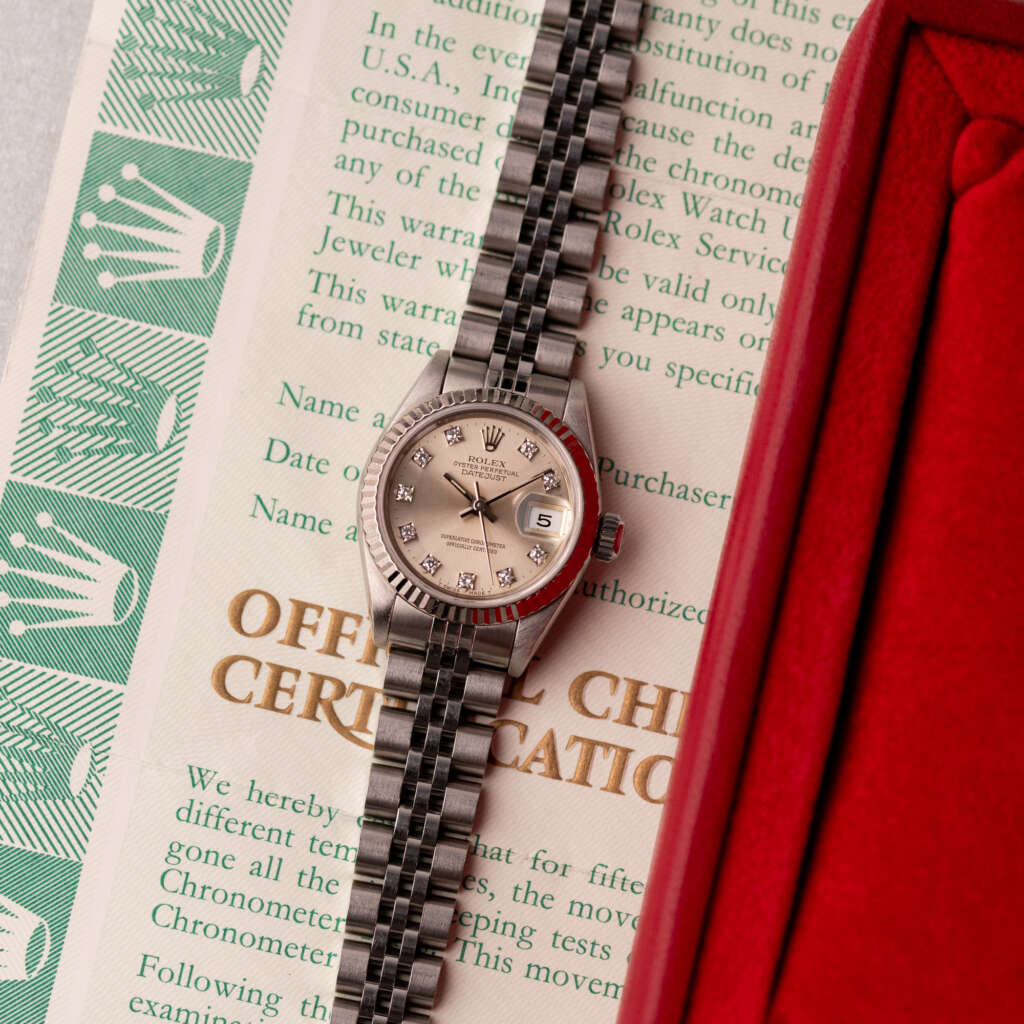
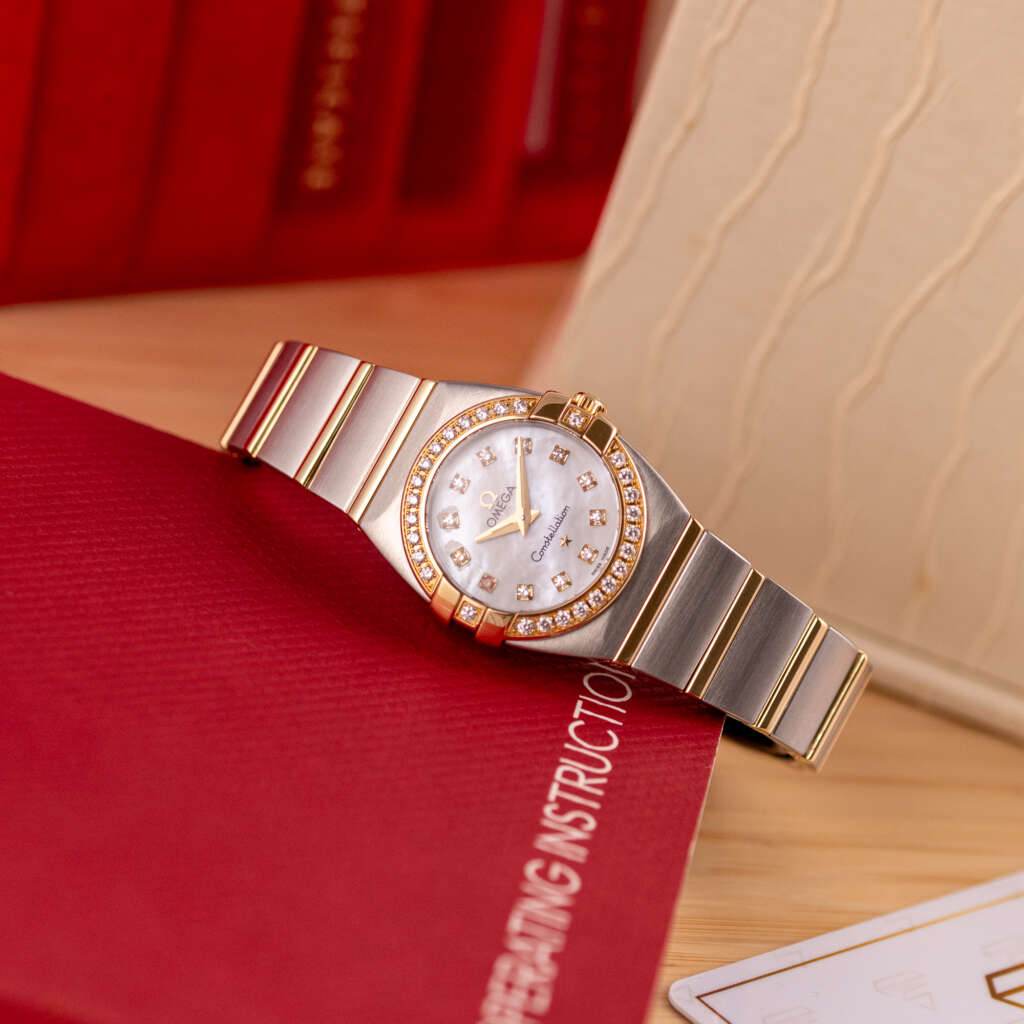
Every luxury brand includes unique identifiers to protect against counterfeiting. These include serial numbers, engraving styles, logo placements, and brand-specific security features. The serial number is always located in a specific place depending on the manufacturer. In the case of Rolex, for instance, it is engraved on the rehaut at six o’clock. The Rolex crown on the rehaut should align perfectly with the twelve o’clock marker. Omega, on the other hand, places its serial numbers on the inner side of the lugs. Any deviation in placement, quality, or alignment may indicate something is off.
Luxury watchmakers pay enormous attention to detail. Logos, inscriptions, and index placements should all be flawless. If a logo appears printed instead of engraved, or if any alignment is off, it is worth investigating further. That said, some high-end counterfeits are exceptionally well made. For untrained buyers, these can be nearly impossible to spot without expert help or magnification tools. Learning how to spot a fake is often about noticing what isn’t quite right. Brands like Rolex are especially targeted, and it helps to know how to spot a fake Rolex. Even a specific model like the Rolex Cosmograph Daytona has unique details. There are guides available on how to spot a fake Daytona if you’re investing in a luxury watch of that caliber.
Testing water resistance and functions
Most genuine luxury watches are rated for water resistance up to a specific depth. Cheaper fakes rarely match those ratings and may leak with even minor water exposure. Verifying water resistance requires specialized pressure testing equipment, typically found at watch service centers.
It’s also important to test all of the watch’s functions. Many luxury models include complications such as chronographs, moon phases, quartz movements, or power reserve indicators. In authentic watches, these features are fully functional. In fakes, they are often non-working dials made purely for appearance. Always check whether each function performs as it should before completing a purchase. The watch requires careful inspection because even the features of the watch can give away signs of a counterfeit.
Purchasing from trusted sources
The counterfeit watch market is evolving quickly. Fake watches are becoming more convincing, and even experienced collectors can be fooled. That’s why it is so important to buy from trusted, professional sources with proven expertise. Buying from an authorized dealer or certified seller is always recommended. If you decide to purchase from a private seller or through an online platform, always ensure full authentication from a qualified watchmaker before finalizing the deal.
At Prime SwissTime, every timepiece undergoes a rigorous inspection before being offered for sale. Our experienced watchmakers examine each watch to confirm the originality of its components, ensure no parts have been replaced, and verify that all serial numbers match the model. We also assess the condition of the movement and perform water resistance testing. Every watch sold comes with a one-year warranty and a warranty card, giving our clients peace of mind with every purchase.
Buying and selling watches in the luxury segment requires knowledge, caution, and understanding of your price range. Whether you’re buying pre-owned watches or vintage watches, your first watch or your fifth, every watch deserves proper authentication. This guide to buying is meant to help you avoid mistakes, especially for first-time buyers. It doesn’t matter what kind of watch you’re after, a dress watch or a sports model, when it comes to luxury watches, often it’s the small details that matter most. This buyer’s guide will help you make an informed decision when buying a luxury watch from reputable brands.
FAQ – authenticating your luxury timepiece
1. What is the most reliable way to tell if a luxury watch is authentic?
While external details are important, the most reliable method is examining the movement. Counterfeiters can replicate cases and dials with high accuracy, but they rarely match the precision, finishing, and specific layout of a genuine manufacturer’s caliber. A professional should open the watch to verify the internal engineering.
2. Can I trust the weight of a watch to prove it’s real?
Generally, authentic luxury watches feel heavier and more substantial because they use high-density materials like solid gold, platinum, or high-grade stainless steel. However, high-end “super-clones” have become better at mimicking this weight, so while a light watch is a red flag, a heavy watch is not a 100% guarantee of authenticity.
3. What are the common “red flags” to look for on the dial?
Look for any imperfections in finishing. Luxury brands like Rolex or Patek Philippe ensure perfect alignment. Red flags include:
- Misaligned logos or hour markers.
- Uneven font weight or “bleeding” ink on the dial text.
- Proportions that look slightly “off” compared to official brand photos.
- Non-functional complications (e.g., a chronograph hand that doesn’t move or a moon phase that is just a painted image).
4. Where should I look for serial numbers and engravings?
Each brand has specific locations for these identifiers:
- Rolex: Modern models have the serial number engraved on the rehaut (the inner rim between the dial and the crystal) at the 6 o’clock position.
- Omega: Typically places serial numbers on the underside of one of the lugs.
- General: Look for hallmarks on gold or platinum watches. These should be crisp and clearly stamped, never faint or blurry.
5. Are “hallmarks” on precious metal watches easy to fake?
Counterfeiters often add hallmarks to gold-plated steel watches to make them look like solid gold. To verify, look at the quality of the engraving and check for signs of plating wear (like silver-colored steel showing through on the edges of the lugs or bracelet).
6. How do I know if the watch’s functions are genuine?
Test every button and sub-dial. In an authentic mechanical watch, every complication (like a power reserve indicator or a second time zone) must be fully functional. In many fakes, these sub-dials are “frozen” or simply move along with the main time-setting, serving no actual purpose.
7. Is water resistance a good test for authenticity?
Yes, but only if performed by a professional. Most luxury watches are built to strict depth ratings. Cheaper fakes almost always fail professional pressure tests. However, never test this yourself by submerging a watch; if it is fake, you may ruin the movement instantly.
8. What is the safest way to buy a luxury watch?
The safest route is to buy from authorized dealers or certified professional sellers like Prime SwissTime. Professional sellers provide a rigorous multi-point inspection, verify that all serial numbers match the model, and offer a warranty (typically one year) to protect your investment.