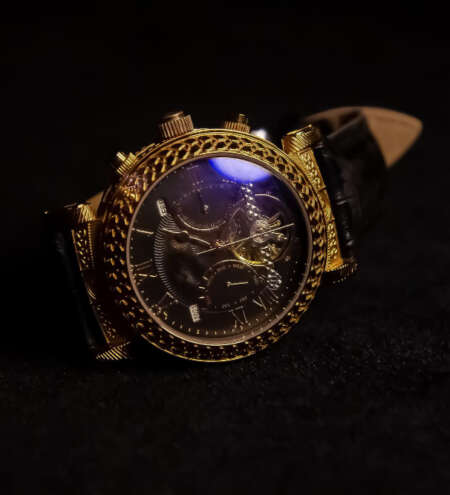
For years, the luxury wristwatch market was dominated by a “bigger is better” philosophy. The late 1990s and early 2000s pushed case sizes to the extreme, with oversized silhouettes commanding attention on the wrist. Yet, true elegance has a habit of returning to its roots. Today, the watch world is witnessing a profound shift in perspective. Discerning collectors are looking past the bulky, modern giants and rediscovering the perfect proportions of the past.
We are seeing an unprecedented surge in interest for mid-sized timepieces, specifically those measuring 36mm to 38mm. This classic size range defines the neo-vintage era – a golden period in horology running roughly from the late 1980s to the late 2000s.
It was an era born out of the ashes of the quartz crisis, a time when mechanical watchmaking underwent a Renaissance. Brands were fighting to prove the enduring value of traditional craftsmanship, resulting in some of the most innovative, beautifully proportioned, and collectible timepieces ever made.
The mid-size appeal – why 36-38mm is the sweet spot?
The term “neo-vintage” refers to a unique transitional window. These watches possess the undeniable soul and vintage aesthetics of the mid-20th century, yet they are built with modern technical upgrades that make them reliable enough for daily wear.
When you explore the 36-38mm category within the pre-owned market, you quickly realize why these proportions are reclaiming the spotlight:
- Sartorial versatility.
A 36mm or 38mm case slips effortlessly under a bespoke shirt cuff. It functions beautifully as a dress watch, yet retains enough presence to be worn casually. - Pure ergonomics.
These cases respect the natural anatomy of the wrist. They distribute weight perfectly, offering a level of comfort that a 44mm modern sports watch simply cannot match. - Dial proportions.
In smaller cases, complications like a chronograph or a perpetual calendar are tightly integrated. There is no wasted space, resulting in a balanced layout where sub-dials sit harmoniously instead of being squeezed into the center of a giant dial.
The best of both worlds – vintage soul, modern strength
What makes neo-vintage watches typically more compelling than a brand-new showroom piece or a delicate mid-century relic? It is their unique position as transitional objects. They represent the best of the old world blended with the security of the new.
A true vintage watch from the 1950s or 60s is undoubtedly romantic, but it comes with immense fragility. The plexiglass crystals scratch easily, the cases rarely seal against humidity, and replacement parts are scarce.
Conversely, a neo-vintage watch offers a much friendlier ownership experience. This period saw the widespread introduction of the scratch-resistant sapphire crystal, providing incredible durability. Yet, beneath that sapphire, you still find the irreplaceable character of the past. Many watches from this period utilize tritium or early Luminova, meaning the lume on the dial will develop a gorgeous, creamy patina over time. You get the aesthetic romance of a beautifully aged timepiece, backed by modern water-resistance and precise date and hacking features.
The brands shaping the neo-vintage renaissance
When looking at the rise of neo-vintage watches, specific houses stand out for their mastery of the 36mm and 38mm proportions.
The dominance of classic profiles – Rolex and Patek Philippe
No discussion about watch collecting can ignore Rolex. The 36mm Rolex Oyster Perpetual and Datejust references from the 1990s are absolute masterpieces of balance. They retain the classic slim lugs that disappeared with modern maxi-cases, maintaining a direct line to traditional watchmaking.
For high-complication horology, Patek Philippe ruled the 36mm to 37mm space during the neo-vintage period. Legendary references like the Patek Philippe Ref. 3940 Perpetual Calendar or the Ref. 3970 Chronograph Perpetual Calendar are widely considered by auction houses to be some of the finest examples of mechanical watchmaking in human history. They are proof that a watch doesn’t need to be large to possess immense mechanical complexity and gravity.
Explore our carefully vetted selection of pre-owned Rolex and Patek Philippe timepieces to experience these iconic proportions firsthand.
Audemars Piguet and Cartier
The 1990s was also an era of bold shapes and historical revivals executed in traditional sizes. Audemars Piguet thrived during the neo-vintage period by embracing beautifully restrained proportions, housing ultra-thin movements and complex perpetual calendars in elegant 36mm and 37mm cases, proving that their genius extended far beyond the sportier Royal Oak. Simultaneously, Cartier produced masterful mechanical variations within the CPCP (Collection Privée Cartier Paris) line, which rarely exceeded 38mm.
The pioneers of independent watchmaking
Perhaps the most explosive growth in desirability within the world of horology surrounds early independent watchmaking. In the late 1990s, master watchmakers stepped away from major houses to create under their own names, working in limited numbers and focusing on exquisite, hand-finished movements.
The rise of independent watchmakers during this era gave birth to legends like F.P. Journe (with early 38mm Tourbillon Souverain and Chronomètre à Résonance models), Philippe Dufour, Michel Parmigiani (with early Parmigiani Fleurier Toric models), and Breguet under the ownership of Investcorp. Giants of the craft like Svend Andersen (founder of Andersen Genève) demonstrated that independent traditional mechanical art looked best when scaled elegantly to the human wrist.
The Prime SwissTime standard
At Prime SwissTime, we don’t just source luxury watches. We curate legacies. Buying a pre-owned neo-vintage piece requires an eye for detail that modern retail simply doesn’t demand.
Our team and internal watchmaker network meticulously inspect every incoming timepiece to protect your investment.
- Case Integrity.
We prioritize watches with sharp, unpolished case facets, ensuring the original 36mm or 38mm geometry remains intact. - Dial and Hands.
We closely examine the luminescent properties, confirming whether the tritium luminous material is original and tracking how the patina has evolved. - Mechanical Excellence.
Every movement – from a standard caliber to a complex escapement or a long power reserve mechanism – is fully serviced to ensure peak modern performance.
Whether you are looking for a classic steel sports watch, a gold dress watch, or a rare independent Ref, we focus on providing exceptional value for money and accessibility to pieces that are becoming exponentially rarer by the day.
Finding your perfect proportions
The market has spoken. The era of the oversized wrist-weight is drawing to a close. Collectors have realized that true luxury is measured in nuance, craftsmanship, and wearability – not millimeters. A 36mm or 38mm neo-vintage watch offers a profound connection to history without sacrificing modern utility.
Are you ready to discover the timeless comfort of a classic mid-size case? Browse our full online store or utilize our bespoke Sourcing Service to find the exact neo-vintage reference that speaks to your collection. Let us help you find a timepiece that fits your life, your style, and your wrist, perfectly.
FAQ
Why are 36-38mm watches suddenly trending after years of larger case sizes?
Collectors are rediscovering that true elegance lies in comfort and proportion. A 36-38mm case balances perfectly on the wrist, slips effortlessly under a suit cuff, and represents a return to classic, timeless tailoring over loud, oversized trends.
What makes a 1990s neo-vintage watch safer to buy than a true 1960s vintage piece?
Neo-vintage pieces offer the “best of both worlds.” They retain the soulful, hand-finished character and aging dials of the past, but feature modern technical advantages like scratch-resistant sapphire crystal and vastly superior gasket systems for daily reliability.
Will the tritium or lume on a 36mm Rolex or Patek Philippe from this era still glow?
Generally, no. Watches from the neo-vintage era that utilize tritium luminous material have passed their radioactive half-life, meaning they no longer glow. Instead, they develop a highly prized, creamy gold patina over time that modern watches simply cannot replicate.
Are mid-sized neo-vintage watches a good financial investment?
Yes, they currently offer exceptional value for money and high desirability. Because these references were often produced in limited numbers right after the quartz crisis, their accessibility is dropping rapidly, making them increasingly rarer and highly sought-after at global auction houses.